Palatine Hill: Birthplace of Rome, Imperial Palaces & 2026 Visitor Guide
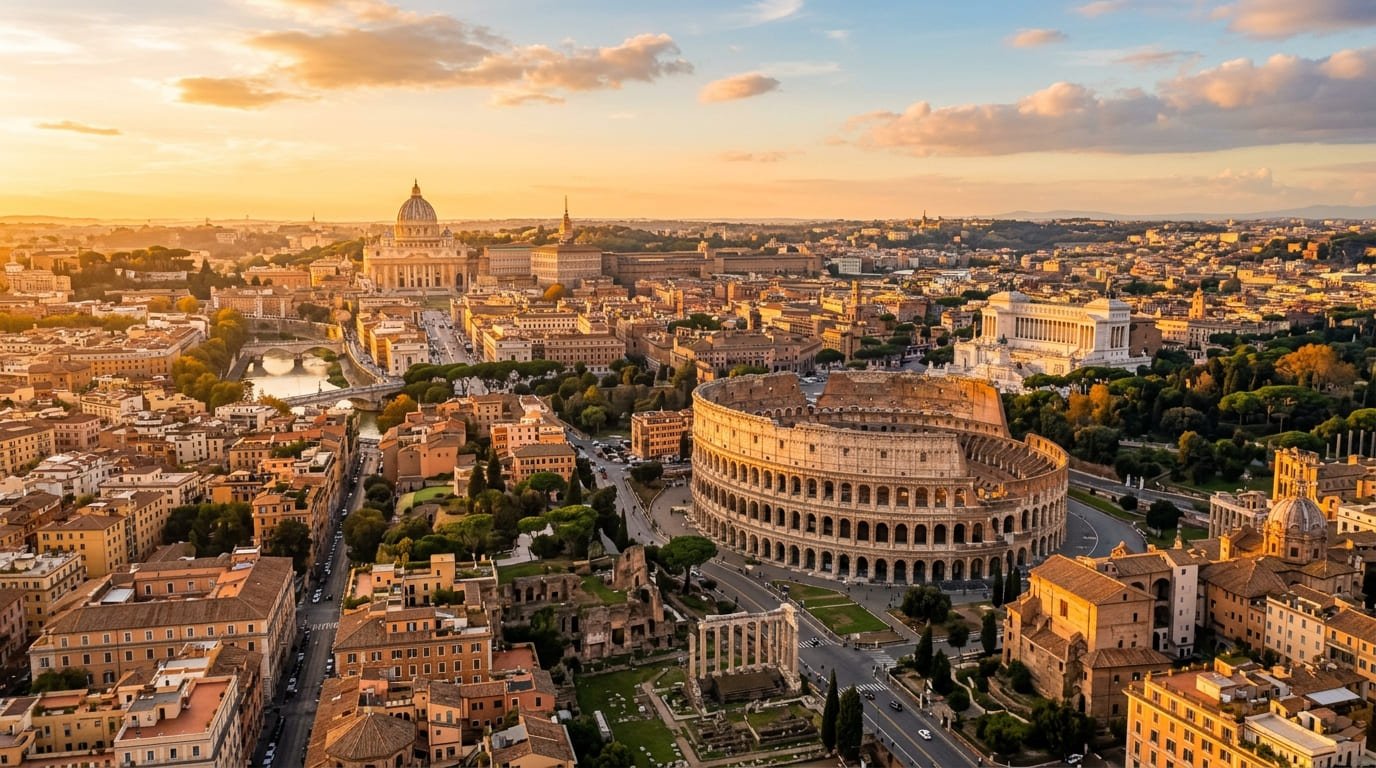
Rising 40 metres above the Forum, the Palatine Hill (Monte Palatino) is the legendary birthplace of Rome where Romulus founded the city in 753 BC and where emperors constructed the sprawling palatial complexes that gave the world the word 'palace.'
📖 Table of Contents
Birthplace of Rome: Romulus & The Lupercal
According to Roman mythology, it was at the foot of the southwestern slope of the Palatine Hill where the basket carrying the infant twin brothers Romulus and Remus washed ashore. In the legendary cave of the Lupercal, a she-wolf (Lupa Capitolina) suckled and saved them. Explore the imperial palaces of the Caesars with your included 24-hour admission on all Colosseum tickets.
Later in 753 BC, Romulus ploughed the sacred boundary furrow (pomerium) around the summit of the Palatine Hill, founding Rome. Archaeological excavations have confirmed post-holes of genuine 8th-century BC Iron Age thatched huts (the "Huts of Romulus") right where ancient tradition said they were.
Why Roman Emperors Built Their Palaces Here
During the Roman Republic, the Palatine was Rome's most exclusive residential neighborhood - home to aristocrats and orators including Cicero, Marc Antony, and the poet Catullus. But when Augustus became Rome's first emperor in 27 BC, he chose to live on the Palatine Hill, building an elegant home adjacent to the Temple of Apollo.
Successive emperors expanded across the hilltop until the entire mountain became a unified imperial palace complex known as the Palatium - the linguistic root of the English word "palace" and French "palais".
Top 5 Palaces & Monuments on the Palatine
Emperor Domitian's official state palace containing the colossal Throne Room (Aula Regia), the imperial council chamber, and the private banquet hall with hypocaust heated floors.
The luxurious two-storey private residence of the imperial family, built around a sunken courtyard featuring an elaborate maze-like fountain basin.
An enormous 160-metre-long sunken arena resembling a circus stadium, used by emperors as a private botanical garden, riding school, and walking track.
Remarkably preserved private rooms of Emperor Augustus and his wife Livia, featuring breathtaking, vibrant Second Style Roman wall frescoes in gold, vermilion, and Egyptian blue.
Farnese Gardens & Panoramic Belvederes
In the 16th century, Cardinal Alessandro Farnese transformed the northern ruins of Tiberius's palace into the Orti Farnesiani - one of the earliest botanical gardens in Europe. Today, this peaceful park features fragrant citrus groves, Renaissance pavilion staircases, and shaded pergolas.
Walk out onto the Belvedere del Palatino terrace at the edge of the gardens: it offers Rome's most famous panoramic overlook, giving you an unobstructed bird's-eye view looking directly down into the Roman Forum with Capitoline Hill rising beyond.
The Palatine Museum (Museo Palatino)
Situated in the center of the hilltop in a former monastery, this museum houses extraordinary original sculptures and artifacts uncovered during excavations of the imperial palaces: pristine marble portrait busts of Nero and Marcus Aurelius, winged victory statues, and the famous 3rd-century "Alexamenos graffito" - one of the earliest surviving depictions of Jesus Christ.
Frequently Asked Questions
Standard general admission includes Colosseum Levels 1 & 2, the Roman Forum, and Palatine Hill. Special areas like the Arena Floor and Underground require specific upgraded tickets or guided tours.
Colosseum tickets and guided tours sell out rapidly in 2026. For peak months (April to October), book 2 to 4 weeks ahead to secure your desired entry time slot.
Colosseum entry is tied to your specific booked time slot. Access to the Roman Forum and Palatine Hill is valid on the same ticket for 24 hours from your first entry.
Airport-style security checkpoints with metal detectors and X-ray scanners are mandatory for all visitors. Expect waiting times of 15–20 minutes at security, even with fast-track reserved slots.
Yes, official guided tours are offered in English, Italian, Spanish, French, German, and several other languages daily. Wireless headsets are provided so you can hear your licensed guide clearly.